Manual Osteopathy is a philosophy of science and art, its science include the chemical, physical and biological sciences related to the maintenance of health and the prevention, cure and alleviation of disease. It is a hands on manual therapy technique, designed to help the system and structures of the human body function better by giving a holistic approach.
The Main Treatment Specialty:
- Structural Alignment– alignment of the spine, sacrum, pelvis and all the bones of the body to restore function.
- Visceral Manipulation- The main focus of visceral manipulation is to restore normal motricity, motility, and mobility of each organ using gentle hands-on techniques.
- Myofascial Remodeling– Fascia forms a continuous tensional network throughout the human body covering and connecting every single organ, every muscle, and even every nerve or tiny muscle fiber. Fascial adhesions and loss of viscoelasticity reduce local blood circulation, prolonged ischemia that causes muscle fiber damage.
- Craniosacral Therapy– is a light-touch approach to assess and balance the craniosacral system. The craniosacral system consists of membranes and fluid that surround and protects the spinal cord and the brain. The aim of the treatment is to release restriction of the craniosacral system to improve the function of the central nervous system.
- Manual Lymphatic Drainage– improves the immune system, lymph system becomes more efficient at fluid and waste removal.
- Exercises Prescription
- Vestibular Rehabilitation (Dizziness, vertigo, ringing of the ear)
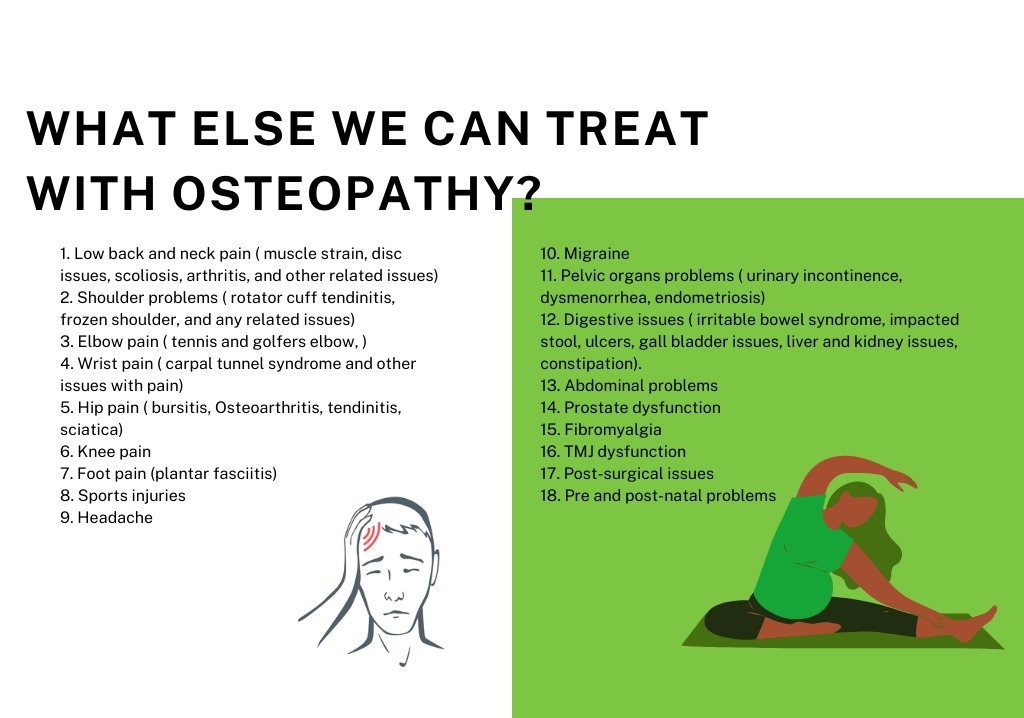
What Manual Osteopathic Therapy can also treat:
- Low back and neck pain (muscle strain, disc issues, scoliosis, arthritis, and other related issues)
- Shoulder problems (rotator cuff tendinitis, frozen shoulder, and any related issues)
- Elbow pain (tennis and golfer elbow)
- Wrist pain (carpal tunnel syndrome and other issues with pain)
- Hip pain (bursitis, Osteoarthritis, tendinitis, sciatica)
- Knee pain(Osteoarthritis)
- Foot pain (plantar fasciitis)
- Sports injuries
- Headache
- Migraine
- Pelvic organs problems (urinary incontinence, dysmenorrhea, endometriosis)
- Digestive issues ( irritable bowel syndrome, impacted stool, ulcers, gallbladder issues, liver and kidney issues, constipation)
- Fibromyalgia
- TMJ dysfunction
- Post-surgical issues
- Pre and post-natal problems
- Car accident injuries
 Renewed Manual Osteopathic Wellness Clinic